

Written by Way With Words Team
Reliable Voice Diary Speech Data Use in Behavioural Studies
This article explores why researchers use voice diary speech data in behavioural research, how data is collected, and what analytical techniques are applied.
How Are Voice Diaries Used in Behavioural Data Studies?
Enabling Participants to Document Experiences in Their Own Words
To study behaviour properly, researchers need data close to real life. Standard surveys help, but they often miss timing, emotion, and context. Voice diaries can fill that gap, especially when teams also track and reduce speech data errors in processing workflows.
When participants record thoughts in their own words, researchers gain richer longitudinal evidence of daily experiences.
This article explains how voice diary speech data is used, how it is collected and analysed, and where it adds value in healthcare, psychology, and human-computer interaction (HCI).
What Is a Voice Diary?
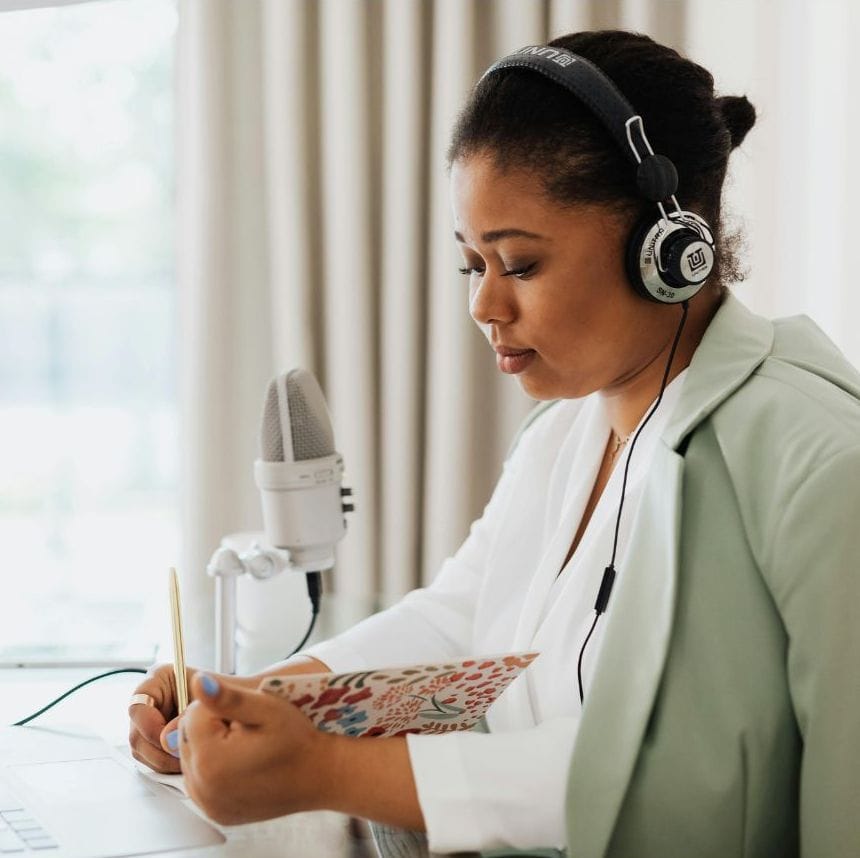
A voice diary is a series of spoken entries recorded over time. Instead of writing notes, participants speak into a phone or recorder as events happen. This approach is often called audio journaling.
Because entries are made in the moment, they capture details that text often misses, such as tone, pauses, frustration, or relief.
Researchers usually combine two entry types:
- Prompted entries, where participants answer specific questions.
- Open entries, where participants record anything they feel is relevant.
This structure helps teams track behavioural change across days or weeks. It also reduces recall bias, since participants do not need to reconstruct events long after they happened.
Why Researchers Use Them
The use of behavioural speech research techniques like voice diaries is growing because they unlock access to data that is both personal and spontaneous. Unlike structured questionnaires, which often lead participants into narrow response categories, voice diaries open a window into the nuances of lived experience.
Several key reasons explain their growing popularity:
- Capturing private thought processes: Participants often disclose feelings and reflections in a diary format that they would hesitate to reveal in an interview. The voice medium, in particular, allows them to articulate emotions without the filter of writing. For researchers, this creates a more authentic, less self-censored dataset.
- Accessing spontaneous emotion: Voice diaries preserve not just the words spoken but also the way they are said. Vocal tone, pitch, and rhythm convey emotional states more reliably than text. For example, a patient reporting “I feel fine” in a flat, tired voice reveals a very different state than one who says the same phrase with energy and optimism.
- Tracking longitudinal change: The longitudinal design of diary studies allows researchers to track how individuals’ thoughts and behaviours shift over time. This is invaluable in mental health research, where fluctuations in mood or symptoms may only become clear when observed across days or weeks.
- Reducing recall bias: Traditional self-report studies often rely on participants remembering how they felt or behaved in the past. Voice diaries minimise this by recording events close to when they occur.
- Creating naturalistic data: Because entries are self-recorded in real-world environments, they often capture background sounds, interruptions, and contextual details. This makes the data more ecologically valid, reflecting everyday life rather than the artificial setting of a lab or clinic.
Researchers use voice diaries to study a range of phenomena, from stress and coping mechanisms to social interaction patterns. Their richness lies in combining qualitative depth with the potential for quantitative analysis through transcription, coding, and natural language processing.
Speech Collection and Management Tools
The collection and management of voice diary speech data requires reliable technological frameworks. Participants need tools that are easy to use, secure, and capable of capturing high-quality recordings in varied environments.
The most common methods include:
- Custom mobile applications: Many research projects now develop bespoke mobile apps for diary collection. These apps allow participants to log entries through voice recordings, which are automatically timestamped and securely uploaded to a central server. Some apps also provide prompts or reminders to encourage consistent entries.
- Voice note integrations: Simpler studies may rely on existing tools such as smartphone voice memo apps, WhatsApp audio messages, or integrated journaling platforms. These solutions reduce barriers to participation but raise issues around data security and consistency.
- Metadata capture: Modern tools can automatically collect contextual information such as the time, location, and duration of entries. This metadata enriches the dataset and allows researchers to analyse behaviours in relation to place or time of day.
- Secure storage: Because voice diaries often contain highly sensitive personal information, storage must meet strict ethical and legal standards. Encrypted servers, anonymisation protocols, and GDPR compliance are all essential components of responsible speech data management.
Management tools must also be accessible to participants of different ages, levels of technical ability, and cultural contexts. If the collection process feels too complex, participants may drop out, jeopardising the longitudinal design of the study.
For large-scale projects, partnerships with transcription and speech collection services ensure that audio is efficiently processed into analysable formats. The combination of technology, user experience design, and secure infrastructure makes it possible to collect voice diaries at scale while maintaining data quality and participant trust.
Analysis and Transcription Techniques
Once audio data is collected, the next challenge lies in analysis. Researchers typically begin by transcribing the audio, which provides a text-based dataset for further processing. However, transcription alone is not sufficient. The power of audio journaling lies in combining linguistic content with vocal characteristics and contextual metadata.
Several techniques are commonly used:
- Natural language processing (NLP) tagging: Algorithms can automatically tag words or phrases by category, such as health symptoms, emotional expressions, or activity descriptions. This helps researchers quantify themes across participants.
- Topic extraction: Voice diary transcripts can be analysed for recurring themes. For example, participants with chronic pain may repeatedly mention mobility challenges, sleep disruption, or frustration with healthcare systems.
- Sentiment analysis: By combining lexical cues with vocal tone, researchers can measure levels of positivity, negativity, or neutrality in participant speech. Sentiment trajectories over time can reveal important behavioural shifts.
- Pattern identification: Machine learning techniques can identify recurring patterns of behaviour or thought. For example, a diary may reveal that stress consistently spikes before social interactions, or that symptom severity worsens in the evenings.
- Multimodal analysis: Beyond words, vocal prosody, pauses, and speech rate provide insight into emotional states. These features can be integrated with transcribed text for a richer analysis.
Human oversight remains essential. Automated tools may misinterpret context or cultural nuances, particularly in diverse populations. Expert transcribers and coders provide the necessary checks and corrections to ensure accuracy.
Ultimately, the goal of analysis is to translate raw voice recordings into structured behavioural insights. Whether through qualitative coding or quantitative modelling, transcription and analysis techniques turn messy, personal speech data into findings that can inform healthcare, policy, and technology design.

Applications in Healthcare, Psychology, and HCI
The applications of voice diary speech data span across multiple fields, but three stand out as particularly significant: healthcare, psychology, and human-computer interaction (HCI).
Healthcare
In healthcare, voice diaries are increasingly used to monitor patients with chronic conditions. For example, individuals with asthma or diabetes can record daily reflections on symptoms, treatment adherence, and emotional wellbeing. This provides clinicians with a continuous dataset rather than snapshots from occasional appointments.
Voice diaries are also valuable in palliative care, where they capture patient experiences that may not be fully communicated during clinical visits.
Psychology
Psychological research benefits enormously from the naturalistic nature of voice diaries. They are used to study mood disorders, anxiety, and stress. For instance, participants with depression may reveal subtle changes in voice tone or word choice that signal worsening symptoms. Longitudinal audio data can help psychologists develop more personalised interventions and refine therapeutic approaches.
Human-Computer Interaction (HCI)
In HCI, voice diaries are employed to evaluate user experiences with new technologies. Instead of filling out surveys after a product test, participants can record their impressions while using a device. This captures immediate feedback and provides designers with authentic insights into user frustrations, successes, and habits.
Across these domains, voice diaries serve as bridges between subjective experience and objective research. They enable scientists and practitioners to see patterns that would otherwise remain hidden, and they give participants a direct voice in shaping the understanding of their own behaviours and needs.
Final Thoughts on Voice Diary Speech Data
Voice diaries represent one of the most intimate and insightful forms of data collection available to behavioural researchers today. They combine the accessibility of everyday speech with the analytical power of modern transcription and natural language processing.
For behavioural scientists, healthcare professionals, and technology designers, they provide a means to understand human behaviour not as a static snapshot, but as a dynamic and evolving process.
As speech technologies and analytical frameworks continue to improve, the potential of voice diaries will only grow. From clinical care to user experience research, they are set to play a defining role in the next generation of behavioural science.
Related blog articles
- Top Speech Data Services Companies: 10 Leaders in Innovation
- Can Voice-Based Commands Be Improved with Behavioural Speech Data?
- Clinical Speech Data: The Voice of the Future in Medicine
Further Captioning Resources
Diary Study: Wikipedia – Covers diary-based methodologies, including audio self-reporting for longitudinal behaviour research.
Way With Words: Speech Collection – Way With Words excels in real-time speech data processing, leveraging advanced technologies for immediate data analysis and response. Their solutions support critical applications across industries, ensuring real-time decision-making and operational efficiency.
Professional transcription services
Need publication-ready transcripts or polished machine output? Explore our core services: