

Written by Way With Words Team
Unveiling Speech Data Collection: The Backbone of Modern AI
This short guide aims to provide a comprehensive overview of speech data collection, its significance, challenges, and real-world applications.
Unveiling Speech Data Collection: The Backbone of Modern AI
Introduction to Speech Data Collection
Speech data collection sits at the core of modern AI and machine learning. If a model is expected to understand real people speaking in real situations, it needs high-quality voice recordings that reflect different accents, environments, and speaking styles. Without that foundation, even advanced systems struggle with accuracy and consistency.
For AI teams, researchers, and product leaders, the challenge is not simply collecting more audio. It is collecting the right audio, with clear consent, useful metadata, and reliable quality controls so the data can support robust model training and evaluation.
This guide explains how speech data collection works, why it matters, and what practical methods organisations use to build effective datasets.
When planning a project, these questions often come up early:
- What is speech data collection?
- Why is speech data collection important for AI and ML?
- What are the main techniques and tools used in speech data collection?
Speech Data Applications & Collections – 10 Key Ingredients
What is Speech Data Collection?
Speech data collection involves gathering audio recordings of human speech for the purpose of training and improving AI systems. These datasets can vary in size, complexity, and content, depending on the specific requirements of the project. Speech data is critical for developing AI applications such as voice assistants, transcription services, and language translation tools.
Speech data collection is the structured process of recording spoken language so it can be used to train, test, and improve AI systems. In practice, this means building a dataset that captures how people actually speak, not just how language appears in written form. A useful collection usually includes variety across speakers, contexts, devices, and acoustic conditions.
Projects use different types of recordings depending on the goal. Spontaneous speech captures natural conversation with pauses, interruptions, and informal phrasing. Scripted or read speech gives clearer coverage of specific words and sentence patterns. Dialogue data adds interaction dynamics, which is especially valuable for assistants and conversational systems.
A strong collection plan balances these formats instead of relying on only one. That balance helps models perform well both in controlled testing and in real-world use where speech is often messy, fast, and context-dependent.

Speech data collection often requires careful planning and execution to ensure data quality and relevance. This includes selecting appropriate recording environments, using high-quality recording equipment, and employing standardised protocols for data collection.
The collected data is then typically annotated with various labels, such as speaker identity, emotional tone, and background noise, to provide additional context for AI training. This rich metadata helps AI systems learn not just the words being spoken, but also the nuances of human communication, including intonation, emotion, and context.
Importance of Speech Data in AI and ML
Speech data is vital for training AI and ML models to accurately recognise and process human language. The quality and diversity of the collected speech data directly impact the performance of these models. High-quality speech data enables AI systems to understand different accents, dialects, and speaking styles, making them more robust and versatile.
Model quality depends on how varied and well-labelled the speech dataset is. Diverse recordings help systems handle accents, dialects, and real-world noise without bias.
You can see this in voice assistants, transcription tools, and translation products: better training data usually means better recognition in production.
Speech data also supports accessibility and inclusivity in technology. By training AI systems on diverse speech data, developers can create applications that cater to users with different linguistic backgrounds, speech impairments, or atypical speaking patterns. This not only enhances the user experience but also democratises access to technology, ensuring that it serves a broader population. In summary, the importance of speech data in AI and ML cannot be overstated, as it fundamentally determines the effectiveness, accuracy, and inclusivity of language-based AI applications.
Techniques and Tools for Collecting Speech Data
There are several methods and tools available for collecting speech data:
-
Crowdsourcing: Using platforms like Amazon Mechanical Turk to gather speech samples from a diverse group of participants.
-
Field Recording: Capturing speech data in various environments to ensure a wide range of audio conditions.
-
Synthetic Data Generation: Creating artificial speech data using text-to-speech technologies.
Challenges in Speech Data Collection
Collecting speech data comes with its own set of challenges, including:
-
Privacy and Consent: Ensuring that participants provide informed consent and that their data is handled securely.
-
Diversity: Gathering speech data from a broad demographic to avoid biases in AI models.
-
Quality Control: Maintaining high standards in audio quality and transcription accuracy.
Case Studies of Successful Speech Data Collection Projects
Several organisations have successfully implemented speech data collection projects. For instance:
-
Google’s Speech Recognition: Google’s extensive data collection efforts have significantly improved the accuracy of their voice recognition systems.
-
Microsoft’s Conversational AI: Microsoft uses vast datasets to train their conversational AI, resulting in highly responsive and context-aware systems.

Amazon’s Alexa is another example of successful speech data collection. Amazon has continuously collected and analysed speech data to improve Alexa’s ability to understand and respond to user commands.
By leveraging data from millions of interactions, Amazon has refined Alexa’s natural language processing capabilities, enabling the assistant to perform a wide range of tasks, from controlling smart home devices to providing information and entertainment. The success of these projects highlights the importance of robust data collection strategies and the impact they can have on the development of advanced AI systems.
Key Factors in Successful Speech Data Collection
Successful speech data collection hinges on several key factors, including:
-
Participant Recruitment: Ensuring a diverse and representative pool of participants.
-
Data Annotation: Accurately labelling speech data to facilitate effective training of AI models.
-
Continuous Improvement: Regularly updating and refining speech datasets to keep pace with evolving linguistic trends.
Legal and Ethical Considerations
When collecting speech data, it is essential to navigate legal and ethical considerations. This includes ensuring compliance with data protection regulations, obtaining explicit consent from participants, and implementing measures to safeguard their privacy.
Navigating legal and ethical considerations is crucial in speech data collection. Compliance with data protection regulations, such as the General Data Protection Regulation (GDPR) in Europe, is essential to ensure that the collection, storage, and use of speech data are conducted legally. These regulations mandate strict guidelines on obtaining consent, data anonymisation, and providing participants with the right to access, correct, or delete their data. Organisations must implement robust data governance frameworks to ensure compliance and avoid legal repercussions.
Ethical considerations go beyond legal compliance, focusing on the responsible and fair treatment of participants. This includes obtaining explicit consent, being transparent about the purpose of the data collection, and ensuring that participants are not exploited or misled. It is also important to consider the potential biases that can arise from the collected data. For instance, if the dataset predominantly features voices from certain demographics, the resulting AI models may perform poorly for underrepresented groups. Addressing these biases requires proactive efforts to ensure diversity and fairness in data collection.
Additionally, safeguarding the privacy of participants is paramount. Speech data can contain personal and sensitive information, and it is the responsibility of the collecting organisation to implement measures to protect this data. This includes secure storage solutions, encryption, and access controls to prevent unauthorised use or data breaches. Ethical guidelines, such as those provided by the Association for Computing Machinery (ACM) and the Institute of Electrical and Electronics Engineers (IEEE), offer valuable frameworks for conducting ethical speech data collection, emphasising respect for participant autonomy, beneficence, and justice.
Speech Data Applications
Speech data applications are vast and varied, ranging from voice-activated assistants and customer service chatbots to advanced transcription services and language learning apps. These applications leverage speech data to provide seamless and interactive user experiences.
Speech data applications are diverse and span across various industries, leveraging the power of AI to enhance user experiences and streamline operations. One of the most prominent applications is in voice-activated assistants, such as Apple’s Siri, Amazon’s Alexa, and Google Assistant. These assistants rely on vast amounts of speech data to understand and respond to user commands, enabling hands-free operation of devices, smart home management, and access to information and services. The ability to accurately recognise and process natural language is key to the effectiveness of these voice-activated systems.
Customer service chatbots are another significant application of speech data. By integrating speech recognition and natural language processing capabilities, these chatbots can interact with customers in a conversational manner, providing assistance, answering queries, and resolving issues. This not only improves customer satisfaction but also reduces the workload on human agents, allowing them to focus on more complex tasks. Advanced transcription services also benefit from speech data, converting spoken language into written text for various purposes, such as creating meeting minutes, generating subtitles for videos, and assisting individuals with hearing impairments.
In the realm of education, speech data applications include language learning apps that use AI to help users practice pronunciation, learn new vocabulary, and improve their conversational skills. These apps leverage speech data to provide personalised feedback and adaptive learning experiences, making language acquisition more effective and engaging. Additionally, speech data is used in developing assistive technologies for individuals with disabilities, such as speech-to-text software for those with hearing impairments and voice-controlled devices for individuals with mobility challenges. These applications demonstrate the broad impact of speech data on enhancing accessibility, efficiency, and user engagement across various domains.
Advances in Speech Data Technology
The field of speech data collection is continuously evolving, with advancements in technology making the process more efficient. Innovations such as automated speech recognition (ASR) systems and improved recording devices contribute to higher quality datasets.
The field of speech data collection is continuously evolving, with advancements in technology making the process more efficient and effective. One significant innovation is the development of automated speech recognition (ASR) systems, which can transcribe spoken language into text with high accuracy. ASR technology has greatly improved over the years, benefiting from deep learning algorithms and large speech datasets. This has enabled the creation of more reliable and accurate transcription services, voice assistants, and real-time translation tools.
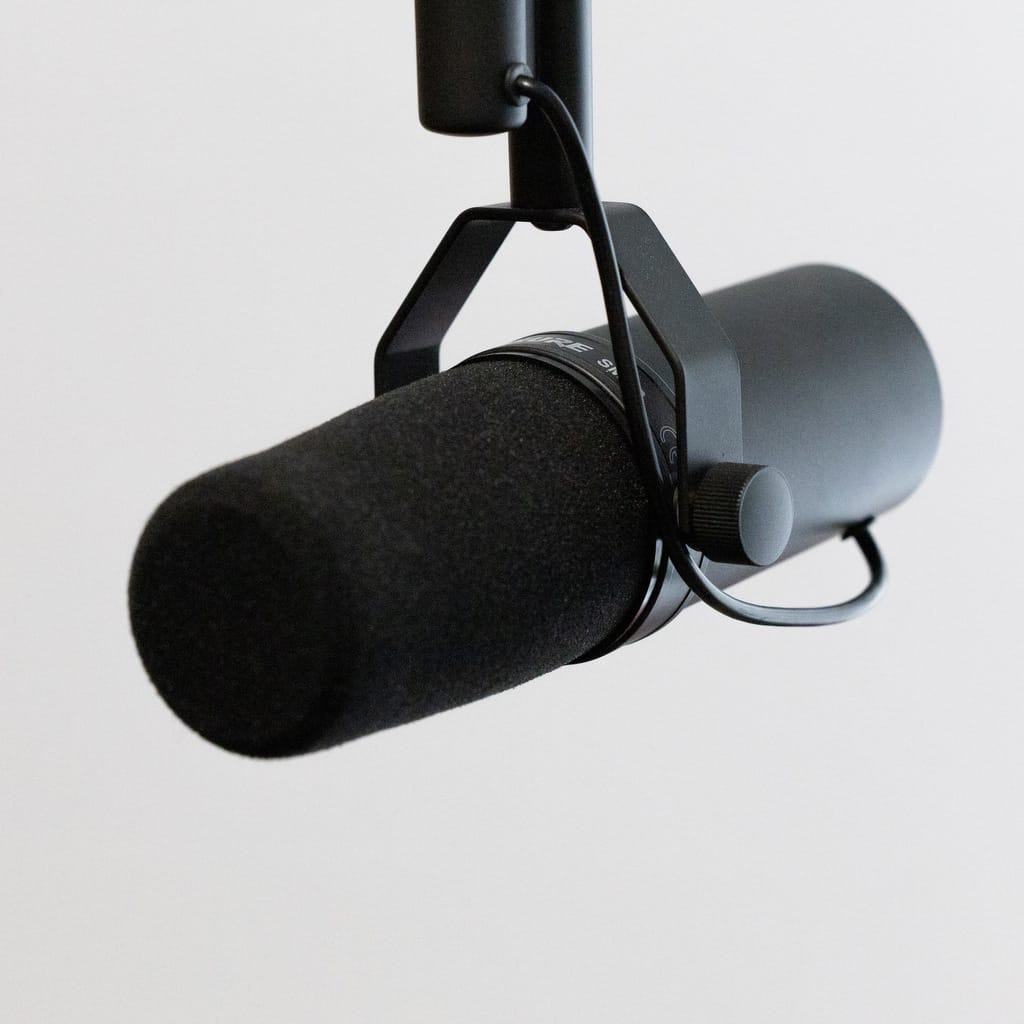
Another advancement is in the area of recording devices and software. Modern recording equipment, such as high-fidelity microphones and portable recorders, allows for the capture of clear and high-quality speech data in various environments. Additionally, software tools for managing and annotating speech data have become more sophisticated, providing functionalities such as automated tagging, noise reduction, and quality assessment. These tools streamline the data collection process, making it easier to gather, organise, and analyse large volumes of speech data.
The use of synthetic data generation is also gaining traction, providing a complementary approach to traditional data collection methods. Text-to-speech (TTS) technologies have advanced to the point where they can produce highly realistic speech samples that can be used to augment real-world datasets.
This is particularly useful for generating speech data in rare languages, specific dialects, or underrepresented speaking styles. By combining synthetic data with real speech samples, AI models can be trained more effectively, ensuring they perform well across a wide range of scenarios.
The Future of Speech Data Collection
The future of speech data collection looks promising, with ongoing research focusing on enhancing data collection techniques, improving data diversity, and addressing privacy concerns. As AI continues to advance, the demand for high-quality speech data will only increase.
The future of speech data collection looks promising, with ongoing research and innovation poised to enhance the techniques and tools used in this field. One area of focus is improving the diversity and inclusivity of speech datasets. Researchers are exploring new methods to recruit participants from underrepresented groups, ensuring that AI models are trained on data that reflects the full spectrum of human speech. This includes collecting data from different age groups, ethnicities, genders, and socio-economic backgrounds to reduce biases and improve the accuracy and fairness of AI systems.
Another promising direction is the integration of privacy-preserving technologies in speech data collection. Techniques such as differential privacy and federated learning are being explored to protect participant data while still enabling the training of robust AI models. Differential privacy adds noise to the data in a way that preserves individual privacy while maintaining the overall utility of the dataset. Federated learning, on the other hand, allows AI models to be trained across multiple decentralised devices without the need to transfer raw data to a central server, enhancing data security and privacy.
Advancements in AI and machine learning algorithms will also drive the future of speech data collection. Improved models for automated transcription, speaker identification, and emotion detection will enable more nuanced and accurate analysis of speech data. Additionally, the development of real-time speech processing technologies will open up new applications and use cases, such as live translation and interactive AI systems that can engage in natural, fluid conversations with users. As these technologies continue to evolve, the demand for high-quality speech data will only increase, driving further innovation and research in this critical area.
Key Tips on Speech Data
- Ensure Diversity: Collect speech data from a wide range of demographics to avoid biases.
- Prioritise Privacy: Implement stringent privacy measures to protect participant data.
- Quality Control: Maintain high standards in audio quality and transcription accuracy.
- Use Advanced Tools: Leverage the latest technologies and tools for efficient data collection.
- Stay Compliant: Adhere to legal and ethical guidelines to ensure responsible data collection.
Related blog articles
- 10 Speech Data Collection Steps for Machine Learning Models
- Scalability in Speech Data Collection: 10 Strategies for Growth & Efficiency
- 10 Key Types of Speech Data: From Conversations to Commands
- Crowdsourced Speech Data: A Cornerstone of Dataset Acquisition
- Designing an Effective Semi-supervised Speech Data Pipeline
- How Do You Prevent Overfitting in Speech Dataset Design?
- Accessibility Tech: How Speech Data is Critical for Inclusivity
- Why Is Timestamp Alignment Important in Speech Data?
Further Resources
**Wikipedia: Speech Recognition
**This article provides an overview of speech recognition, its history, technologies, and applications in various fields, offering foundational knowledge for understanding speech data collection.
**Way With Words: Speech Collection
**Way With Words specialises in creating comprehensive speech datasets, including transcripts for machine learning purposes. This service supports the development of advanced automatic speech recognition models using natural language processing for specific languages and various domains. Each dataset can be tailored to specific dialects, demographics, or other required conditions.
Professional transcription services
Need publication-ready transcripts or polished machine output? Explore our core services: